






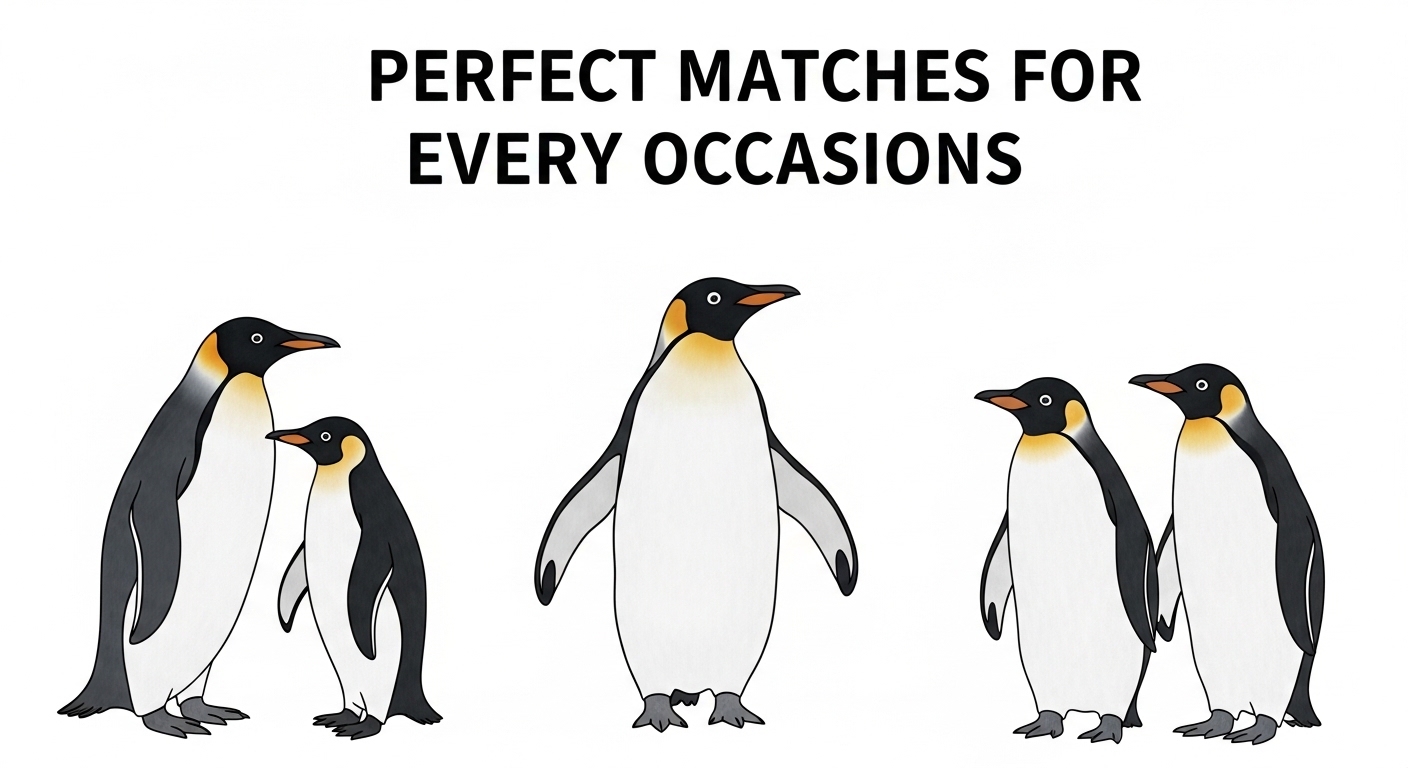
The phrase types of penguins brings to mind icy landscapes, playful waddles, and remarkable survival stories from some of the harshest regions on Earth. Yet these extraordinary birds are far more diverse than many people realize. From the frozen expanses of Antarctica to the sunlit shores near the equator, penguins thrive in environments that differ dramatically in temperature, geography, and ecological demands. Each species represents a perfect biological match for its specific surroundings, demonstrating how evolution crafts specialized traits for survival. In this detailed guide, we will explore their habitats, physical characteristics, feeding habits, breeding behaviors, and conservation challenges while examining how every species fits seamlessly into its natural “occasion.”
Understanding types of penguins and Their Global Distribution
When discussing types of penguins, it is essential to understand their geographic spread. Penguins are native exclusively to the Southern Hemisphere. While many associate them solely with Antarctica, several species inhabit temperate and even tropical regions. Their distribution depends largely on ocean currents, food supply, and breeding terrain.
The largest and perhaps most iconic species is the Emperor Penguin, found in Antarctica’s interior coastal regions. In contrast, the Galápagos Penguin lives near the equator on the Galápagos Islands, benefiting from cold-water currents that make survival possible in a tropical climate. The African Penguin inhabits the southwestern coasts of Africa, while the Little Blue Penguin resides along the coastlines of Australia and New Zealand.
The table below illustrates how various species align with their primary habitats.
| Species | Primary Region | Climate | Notable Adaptation |
|---|---|---|---|
| Emperor Penguin | Antarctica | Polar | Extreme cold tolerance |
| King Penguin | Subantarctic Islands | Cold Maritime | Long breeding cycle |
| Galápagos Penguin | Galápagos Islands | Tropical | Heat management behavior |
| African Penguin | Southern Africa | Temperate Coastal | Burrow nesting |
| Little Blue Penguin | Australia & New Zealand | Temperate | Small body size |
This global spread highlights the extraordinary adaptability within the penguin family.
Physical Characteristics Among types of penguins
The physical structure of different types of penguins reflects environmental necessity. All penguins share a streamlined body, flipper-like wings, dense waterproof feathers, and counter-shaded coloration. Their black backs and white bellies provide camouflage while swimming, protecting them from predators both above and below the water’s surface.
However, size differences are striking. The Emperor Penguin can stand nearly four feet tall and weigh up to 99 pounds, making it the largest species. On the opposite end of the scale, the Little Blue Penguin measures about 16 inches in height and weighs only a few pounds. This size variation is not random. Larger bodies retain heat more effectively in cold climates, while smaller bodies suit milder conditions where excessive heat retention could be harmful.
Below is a comparative overview of physical metrics.
| Species | Average Height | Average Weight | Lifespan |
|---|---|---|---|
| Emperor Penguin | 45 inches | 49–99 lbs | 15–20 years |
| King Penguin | 35 inches | 24–35 lbs | 15–20 years |
| African Penguin | 24 inches | 4–8 lbs | 10–15 years |
| Galápagos Penguin | 20 inches | 4–5 lbs | 15–20 years |
| Little Blue Penguin | 16 inches | 2–3 lbs | 6–10 years |
These variations show how anatomy aligns perfectly with habitat demands.
Breeding Patterns Within types of penguins
Breeding behavior offers another lens through which to understand types of penguins as perfectly matched organisms. The Emperor Penguin is renowned for its extraordinary winter breeding cycle. Males incubate eggs on their feet under a specialized brood pouch while females hunt at sea, enduring some of the planet’s most severe weather conditions.
The King Penguin follows one of the longest breeding cycles among birds, lasting over a year. This extended process aligns with food availability patterns in subantarctic regions. Meanwhile, the African Penguin often nests in burrows to protect eggs from heat exposure and predators. Environmental conditions shape every aspect of reproduction, from incubation duration to chick-rearing strategies. This synchronization between life cycle and habitat exemplifies evolutionary precision.
Feeding Habits and Oceanic Adaptations of types of penguins
Dietary preferences further demonstrate how types of penguins adapt to specific ecological contexts. Most species feed on fish, squid, and krill. Antarctic species rely heavily on krill populations sustained by nutrient-rich cold waters.
The Chinstrap Penguin consumes primarily krill and hunts in relatively shallow Antarctic waters. By contrast, the Galápagos Penguin feeds on small tropical fish. Diving depth also varies considerably. Emperor Penguins are capable of dives exceeding 500 meters, showcasing remarkable oxygen efficiency and pressure tolerance.
The table below compares feeding characteristics.
| Species | Main Diet | Average Dive Depth | Hunting Environment |
|---|---|---|---|
| Emperor Penguin | Fish & Krill | 500+ meters | Deep Antarctic waters |
| Chinstrap Penguin | Krill | 70 meters | Coastal Antarctic zones |
| Galápagos Penguin | Small Fish | 50 meters | Tropical waters |
| African Penguin | Sardines & Anchovies | 100 meters | Temperate coastal seas |
Feeding strategies are intricately tied to regional ocean conditions.
Climate Influence on types of penguins
Climate plays a defining role in shaping types of penguins. Cold-climate species develop thicker blubber layers and denser feather coverage. Temperate species rely more on behavioral cooling methods such as panting, spreading flippers, and seeking shade. The African Penguin has specialized pink glands above its eyes that help regulate body temperature by increasing blood flow during heat stress. In contrast, Antarctic species cluster tightly together in large colonies to conserve warmth during winter storms.
Climate-driven adaptation illustrates how each species is a tailored response to environmental pressures.
Social Structure and Communication Among types of penguins
Penguins are highly social birds, often forming colonies that can number in the thousands. These dense gatherings provide protection against predators and assist in thermoregulation. Vocal recognition plays a crucial role in colony life. Parents and chicks identify one another through unique calls, even within noisy groups. Social behavior varies slightly across species but consistently reflects the need for cooperation. The King Penguin forms large breeding colonies on subantarctic islands, while smaller species such as the Little Blue Penguin often nest in more scattered groupings.
Colony living enhances survival odds and strengthens social bonds essential for successful breeding.
Conservation Challenges Facing types of penguins
Despite their adaptability, many types of penguins face significant conservation threats. Climate change impacts sea ice formation, directly affecting breeding and feeding grounds for Antarctic species. Overfishing reduces prey availability for coastal species such as the African Penguin, whose population has declined sharply in recent decades.
Oil spills, pollution, and habitat disturbance further threaten survival. Conservation initiatives focus on establishing marine protected areas, regulating fisheries, and conducting long-term ecological research.
The following table outlines conservation status examples.
| Species | Conservation Status | Primary Threat |
|---|---|---|
| Emperor Penguin | Near Threatened | Climate change |
| African Penguin | Endangered | Overfishing |
| Galápagos Penguin | Endangered | Climate variability |
| King Penguin | Least Concern | Habitat disturbance |
Protecting penguins requires coordinated international efforts and sustainable environmental policies.
Evolutionary History of types of penguins
The evolutionary journey of types of penguins dates back millions of years. Fossil evidence suggests that ancient penguins were larger and possibly more widespread than modern species. Over time, natural selection refined their bodies for efficient aquatic life, transforming wings into flippers and strengthening bones to withstand diving pressures.
This evolutionary pathway demonstrates how environmental conditions drive specialization. Penguins sacrificed flight in favor of swimming mastery, becoming some of the ocean’s most agile avian predators.
Cultural and Educational Significance of types of penguins
Penguins captivate human imagination through documentaries, educational programs, and scientific studies. Their cooperative parenting and social structures often symbolize teamwork and resilience. Researchers study penguin colonies to monitor ocean health and climate trends, as population shifts frequently signal ecological imbalance.
Educational outreach centered on penguins promotes awareness of marine conservation and biodiversity protection. By understanding their ecological importance, communities worldwide become more engaged in preserving natural habitats.
The Perfect Ecological Matches Within types of penguins
When examining types of penguins collectively, a clear pattern emerges. Each species represents a perfect ecological match for its environment. From Antarctica’s icy wilderness to temperate African coastlines and tropical island ecosystems, penguins exemplify the harmony between adaptation and survival.
Their physical traits, breeding systems, feeding methods, and social behaviors align seamlessly with environmental demands. This alignment underscores the delicate balance within ecosystems and highlights the importance of conservation efforts. In conclusion, types of penguins offer a remarkable example of nature’s precision. Each species thrives because it is perfectly suited to its specific occasion in the natural world. By studying and protecting these extraordinary birds, we preserve not only their future but also the health of the marine environments upon which countless other species depend.